
Participants at the Psychosis 2.0 conference, held in Toronto, Canada.
Participants at the Psychosis 2.0 conference, held in Toronto, Canada.
OPEN LETTER, COPIED TO ALL CONCERNED WITH THE ECT-KETAMINE STUDY, INCLUDING NATIONAL INSITUTE FOR HEALTH RESEARCH, NATIONAL RESEARCH ETHICS SERVICE, AND PARTICIPATING NHS TRUSTS AND UNIVERSITIES
June 19, 2014
We are a group of nine mental health experts, including four psychiatrists and affiliates of five Universities. We are writing to you (as a funder, an ethics committee or a NHS Trust) to raise concerns about, and recommend suspension and investigation of, the ‘Ketamine augmentation of ECT to improve outcomes in depression’ study.
{Funder Ref Number: EME-10/90/04 REC Ref: 12/NW/0021 EudraCT Number: 2011-005476-41 ISRCTN Ref: ISRCTN14689382 CTA Ref: 23148/0004/001-0001 Ketamine-ECT Study Protocol – Version 4.2 (03.07.2013)}.
When several mental health staff in the Manchester area started to contact some of us, from August 2013, with concerns about this study, we contemplated writing to you all at that stage to immediately pass on those concerns, as…
View original post 1,996 more words

Carl Jung, John Weir Perry, and Emotion in Dreams
an article by Dr. Michael Cornwall

This entry first appeared at Mad in America on March 8, 2014.
The safety of our children is a sacred obligation we strive to preserve. Anything or anyone that harms them becomes the object of our distrust and potential wrath.
I want to raise the possibility that psychiatry, for all its accomplished champions like Thomas Insel of the NIMH, may have forgotten the elemental fear people feel for the safety of their children. If psychiatry becomes perceived as a consistently increasing threat to our children, then are its days as a monolithic social institution numbered?
This essay was prompted when I recently had a pronounced visceral reaction of repulsion as I read about dozens of young children being subjected to new MRI brain scan research. Many friends that I shared this research with had a similarly strong negative reaction. The NIMH-supported research article, “Disrupted Amygdala Reactivity in Depressed 4- to 6-Year-Old Children,” was reported in the Journal of the American Academy of Child and Adolescent Psychiatry. The two experimental groups were described as “… depressed 4- to 6-year-old children and their healthy peers.”
The pathologizing process of diagnosing and labeling a 4-year-old child as being a clinically depressed research subject and therefore unhealthy compared to their peers, is done with the assumption that making that medical diagnosis is in the best interest of the child.
It is harmful to assume something is wrong with a young child’s brain when there is no doubt ample evidence that something has happened or is happening in the child’s life, that is causing them distress, to say nothing about the negative effects of a child receiving a DSM identity-transforming diagnostic label and being officially categorized as an exceptionally young mental patient.
Plus, what does a doctor tell a 4-year-old child before the MRI machine starts? “Please hold very still now, because we need to find out if there is something wrong with your brain.”
The children in this research on depression were also described as being “medication-naive.” None of them had been on medications – yet. If the word “naive” was instead used to mean that the children were innocent, then that would be accurate because a 4-, 5-, or 6-year-old child is indeed innocent and is helplessly at the mercy of the adults who decide what happens to them.
For over 30 years, I’ve known and worked alongside many child psychiatrists. They are some of the most dedicated and caring people I have ever known. When I would repeatedly protest to them about the dangers of prescribing antipsychotic meds and SSRI’s to children and teens, the psychiatrists often, with true anguish would respond to me by saying, “But Michael, I have to do it! The latest brain imaging research says that psychosis damages the brain, and it has been shown that depression is caused by a lack of serotonin.”
The solid, peer-reviewed research I would then offer, attempting to counter their biochemical, genetic-based, disease model beliefs, would unfortunately not be taken seriously enough to change my psychiatrist coworkers’ minds.
To no avail, I would urge them to consider that valuable scientific inquiry in the broader field of psychology doesn’t have to be limited to only studying genetics and the physical human brain. They shunned the evidence proving the efficacy of psychosocial alternatives to psychiatric medications. They seemed compelled to elevate applied neuroscience as a reified paradigm of understanding and treating human psychological distress.
It should be no surprise that almost all psychiatrists continue to believe what they were taught in their medical training, and believe what is affirmed in every journal they read about the future of psychiatry being applied neuroscience, and that they believe what is repeated to them by every drug company rep who frequently visits them with medication samples.
The path seems to be clear ahead for even more research on preschool children’s brains, because NIMH Chief Thomas Insel has a clear vision that he is determined to make happen. When he says, “The future of psychiatry is clinical neuroscience based on a much deeper understanding of the brain,” Dr. Insel means that his five-year plan called the Human Connectome Project, that will build a baseline data base for brain structure and activity using MRI imaging is leaving the DSM era of psychiatry in the dust.
The DSM is an embarrassment for a world class research scientist like Insel. But what he envisions is much more ominous for children and everyone else.
Insel’s leadership at the NIMH has the very strong support of forced treatment advocate, Dr. E. Fuller Torrey, who says of Insel: “He is the best director we have ever had.”
Insel and newly-elected APA President Dr. Jeffrey Lieberman want to preside over a new era of psychiatry where it gains the stature of any other medical specialty based on hard science. Insel and Lieberman want a research-proven genetic and biological basis for psychiatry, to qualify it as a fully functioning and respected clinical neuroscience.
Dr. Lieberman has recently said in The Scientific American, that vocal critics of psychiatry are “Misinformed or misinforming self-interested ideologues and self-promoters who are spreading scientific anarchy.”
Dissidents such as may appear on Mad in America are dismissed as scientific anarchists by the head of the APA, while President Obama and Congress are hugely bankrolling the new NIMH research on the brain.
The dramatic future for psychiatry envisioned by Doctors Insel, Torrey and Lieberman as a golden age of applied neuroscience appears to be assured.
Is psychiatry, as such a powerful monolithic social institution, truly “too big to fail?” Or is there a hidden vulnerability present in the proud edifice?
I wrote a blog here on MIA a couple of years ago called “I Don’t Believe in Mental Illness, Do You?” What that means to me is that I don’t believe in the centuries-long medical model project of pathologizing human emotional suffering that is the hallmark of psychiatry.
The medical model never satisfied my answers about the causes and healings from my own experiences of emotional suffering and madness, or spoke to me as a reliable guide in helping the children and adults I provide therapy for. If I did believe in the medical model, I would surely do what my child psychiatrist friends unintentionally sometimes do – I would risk harming innocent children while truly believing that I am helping them.
What we believe can dictate what we do. But surely our beliefs should not result in children being harmed.
The problem is, that the medical model belief system sets psychiatrists up to be blind to its harmful applications. Psychiatrists who did lobotomies and sterilizations convinced themselves according to medical model tenets, that such harmful procedures were necessary and in the recipient’s best interest. The fact that child psychiatrists in Australia will actually administer ECT to children under 4 years old, and that antipsychotic and antidepressant medications are given to toddlers in the U.S., is dramatic continued proof of how the treatments dictated by a morally numb psychiatric science are still failing to pass the caregiver litmus test of “First, do no harm.”
Blindly failing that ethical test means that psychiatry is clearly in the process of losing the moral authority to deserve our trust, especially as we learn more of how our children are at risk of being harmed.
So, I have come to believe in recent years that Dr. Insel’s vision and the incredible psychiatric social experiment of pathologizing human emotional suffering will ultimately fail, because psychiatry will continue to zealously and blindly cross a morally repulsive line and forget that a great many people will never accept their children and grandchildren being exposed to danger.
I believe that at some point, those continued treatment excesses with our children will finally cause the general public to lose faith in and simply abandon psychiatry, moving on to a new paradigm of care where the growing demands for safe and nonpathologizing alternatives are met.
The obsolescence of psychiatry may not happen in my lifetime, but you will see the tide turn even more in that direction when a first young blogger appears on Mad in America to proclaim, “I was diagnosed with bipolar disorder and put on antipsychotic medications when I was very young. Please understand, I was only four years old when they started injuring me.”

With guest psychologist Michael Cornwall, who himself as been through madness, this is the most profound examination of psychosis, its causes and healing, you will ever hear. Frightening warnings with an even more positive message. Listen and pass it on.
The Dr. Peter Breggin Hour – Psychosis and Healing – 03/12/14
This entry first appeared at Mad in America on December 12, 2013.
When Richard Price was a young man, he experienced extreme states for which he was labeled schizophrenic and forcibly ‘treated’ with psychiatric medications, ECT, and insulin shock. He suffered from residual effects from this for the rest of his life. In 1962, Price and Michael Murphy founded the Esalen Institute on the Big Sur coast of Northern California. From its beginning, Esalen worked to create sanctuary for people who, like Price, experienced extreme states. “Esalen was Price’s revenge on the mental hospital!” says Murphy.
Both at the institute itself and through the creation of projects like the rigorously designed, NIMH-funded Agnews Project research, Esalen helped to create the contemporary model of madness sanctuary. Agnews, which yet stands as the largest randomly-assigned, double-blind study on first episode psychosis, showed a 70 percent lower re-hospitalization rate advantage from providing a med-free environment for people in initial extreme states; a result which provided impetus and support for John Weir Perry’s med-free sanctuary Diabasis House, and the creation of the I-Ward sanctuary that I served at and wrote about here on MIA in “Remembering a Medication-Free Madness Sanctuary”.
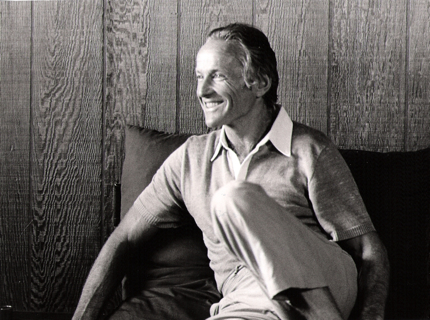
Dick Price
Dick Price also wanted Esalen to be the kind of outside-the-box think tank that could fundamentally re-vision the experience of madness away from the medical model vision. Price realized the applied practice of the medical model belief system was the cause of the greatest trauma in his life. Price said about his own experience that “The so-called ‘psychosis’ was an attempt towards spontaneous healing, and it was a movement towards health, not a movement towards disease.” He believed his experience of madness was not pathological but was full of meaning and was transformative, even perhaps touched with mystical power. He saw Esalen as a refuge for people in extreme states, “A space where it’s possible to live through experience rather than having it blotted out, a place where there aren’t the same negative self-definitions of someone going through this type of experience.”
In addition to Price’s commitment that Esalen provide refuge for those in extreme states, Esalen’s broader liberating influence on world culture would prove to be enormous, as pioneers in philosophy and psychology made it the birthplace and epicenter of the human potential movement. (Sascha Dubrul has written a great article here on MIA about the lasting relevance of the human potential movement for current activism.) The young and gifted Price and Murphy attracted figures like Alduous Huxley, Alan Watts, and Abraham Maslow, who helped put Esalen on the map with week-long and even month-long gatherings for re-visioning madness. Ongoing symposia with names like “The Value of Psychotic Experience” went on for the whole summer of 1968! Gregory Bateson, Murphy and Price, Alan Watts, RD Laing, Erik Erikson, Fritz Perls, John Weir Perry, Claudio Naranjo, Virginia Satir, Julian Silverman, Alan Ginsberg, Michael Harner, Joan Halifax, Stan Groff, and many others all contributed to a growing understanding of extreme states that continues to evolve, as it certainly always must. They saw a neglected possibility for humankind, rooted in a philosophy that has always served to bring a dimension of the sacred and numinous into view.
That ancient but always emerging mythic vision serves as a counterweight to the objectifying, pathologizing and materialistic world view that I believe makes the tragically narrow vision of psychiatry possible. Esalen’s role in altering the views and approaches to madness, or extreme states, continues to this day.
Last month, following in the tradition of passionately focused Esalen conferences, I organized a week-long invitation-only gathering there; “Alternative Views and Approaches to Psychosis.” This conference was preceded in 2011 and 2012 by a workshop and then a conference on alternative approaches to extreme states that began a revival of this aspect of Price’s work, one that had been dormant at Esalen since his death in 1985, when he was struck by a boulder while tending to the Esalen grounds following a flood.
This year, the Esalen conference was attended by 40 people involved in one way or another in the mental health revolution that is daily chronicled here on Madinamerica. People with lived experience brought their invaluable perspective to a gathering that included peer counselors, psychiatrists, therapists, authors, film makers, researchers, mental health services administrators and family members. A great many of the 40 people who gathered felt a sense of urgency to come up with collaborative, strategic ways to unite against the ever-growing human rights abuses of forced treatment. Those human rights abuses are being justified more and more in the name of protecting society from the suspected danger of people who have been given a psychiatric label. That public demonizing of those of us with lived experience of extreme states is being fueled by wide-scale fear mongering and draconian laws that threaten all who experience extreme states.
A number of us at the Esalen gathering committed to work together to fight human rights oppression on many fronts, via media, public education, legal campaigns, and expanding on existing – and developing new – humane, alternative supports for those in extreme states.
Dick Price was a psychiatric survivor whose compassion still touches us now. I know I wouldn’t be writing here on MIA if not for him, because the I-Ward medication free extreme state sanctuary I went to work at in 1980 would never have existed without the Agnews research Price made happen. John Perry’s Diabasis House – that I did my doctoral research on – never would have existed either.
So, thank you Richard Price, for fatefully touching my life, but so much more for helping so many people in extreme states receive the love you were denied in your hour of need, and escape the soul-shrinking diminishment of self-worth, and the hopelessness that a psychiatric diagnosis can inflict. Esalen lives on as an example of what can happen – for individuals and for society at large – when we respond to the extremes that sometimes come with human life not with fear and control but with receptivity and encouragement. There’s no knowing – ahead of time, at least – how much accrues to each of us and to society at large when we learn to listen to the voices – weak, tenuous, or frightening as they may sometimes be – of people who are struggling with the process of coming-to-be in a world that often silences or eliminates them before they have a chance. Dick Price’s voice was silenced early but lives on in the place in which he came to live and die; a memory and evidence of what can happen when the best of mind, body, spirit and community are given a chance to come together.
This entry first appeared at Mad in America on October 29, 2013.
In Butte County, California, Law Enforcement and NAMI have recently partnered to provide identification cards for people in the mental health system. The cards reveal the person’s psychiatric diagnosis and current medication prescriptions. The voluntary photo ID cards are called ‘White Cards.’
The goal is to help law enforcement have on-the-spot psychiatric information, about someone they are questioning. The local NAMI president explained the ID cards also include a person’s triggers, like . . . “If you get too close, I get violent.”
This White Card project may be well-intentioned, but it makes me very uncomfortable. I believe it is a form of psychiatric profiling that could be adopted by law enforcement around the United States, with the powerful political backing of NAMI, and the tacit if not public support of psychiatry.
The operative stigmatizing equation appears to be “mental patient” = unacceptable danger to others. Will police believe that “good,” compliant and NAMI-aligned “mental patients,” who will be able to show the police a White Card with their diagnosis and prescribed medications, make up a lower risk group, than people without a White Card, who reject being identified by a diagnosis, and may not be taking meds?
Will people without White Cards be seen as potentially more dangerous by the police?
And won’t the police eventually want a data base of all White Card holders to cross check against when someone hands them a White Card, creating a kind of watch list?
I can imagine staff at psychiatric hospitals pressuring confined people, to sign up for a White Card as a new and added criterion for their discharge.
I can imagine staff at mental health clinics urging people who are court-ordered to receive forced treatment in the community to also get a White Card.
The cards can be obtained at a NAMI office, or at the police station.
Supplying people with “mental patient” identification cards, conveys the implication that something is proven, that predicts a person’s behavior about potential violence, whereas the state of the scientific research, cannot support such an ID card project aimed at violence prevention. It ends up being psychiatric profiling – a whole class of people becomes the socially identified scapegoat, based on the fears and projections of others. Once again we see the psychiatric diagnosis process serving as a public degradation ceremony, that effectively strips personal identity away, to legitimize the enforcement of the regulation of deviance in our communities.
This White Card project is happening against the backdrop of over 40 states oppressing people with forced, in home treatment laws.
Draconian measures imprisoning and forcibly medicating and giving ECT to people, are challenged now by the UN, which equates forced psychiatric treatment with torture, as Tina Minkowitz has so well documented here on Madinamerica.
This joint Law Enforcement/NAMI White Card project looks to be another ominous development to me.
Your thoughts?
White Cards Aim to Ease law Enforcement Interaction With Mentally Ill in Butte County

 Michael Cornwall, Ph.D.